

What turns a familiar foosball table into an office event everyone wants a rematch in? A foosball tournament for your office can use single-elimination, double-elimination or round-robin play, with singles, doubles or team match-ups to suit the occasion. The format and table setup shape the pace, participation and friendly rivalry.
You already know the best work events get people talking and playing together. Foosball brings quick decisions, shared tactics and a welcome dose of nostalgia, whether you’re planning an office celebration, away day or corporate retreat.
Explore how to choose a tournament format, organise lively matches and plan the equipment for your event. You’ll also see how a foosball table can anchor the action, from a casual office challenge to a larger corporate gathering. Turn a classic game into a spirited team experience!
Key Takeaways
- Choose single elimination for a brisk knockout, double elimination for another chance after a loss, or round robin to give participants more matches.
- Set up singles or doubles to suit your group, and assign clear roles so partners can coordinate their play.
- Use a foosball tournament to bring colleagues together at office celebrations, away days and corporate retreats.
- Plan the table setup around your venue and event flow so the game feels easy to join and fun to watch.
Single- and double-elimination formats
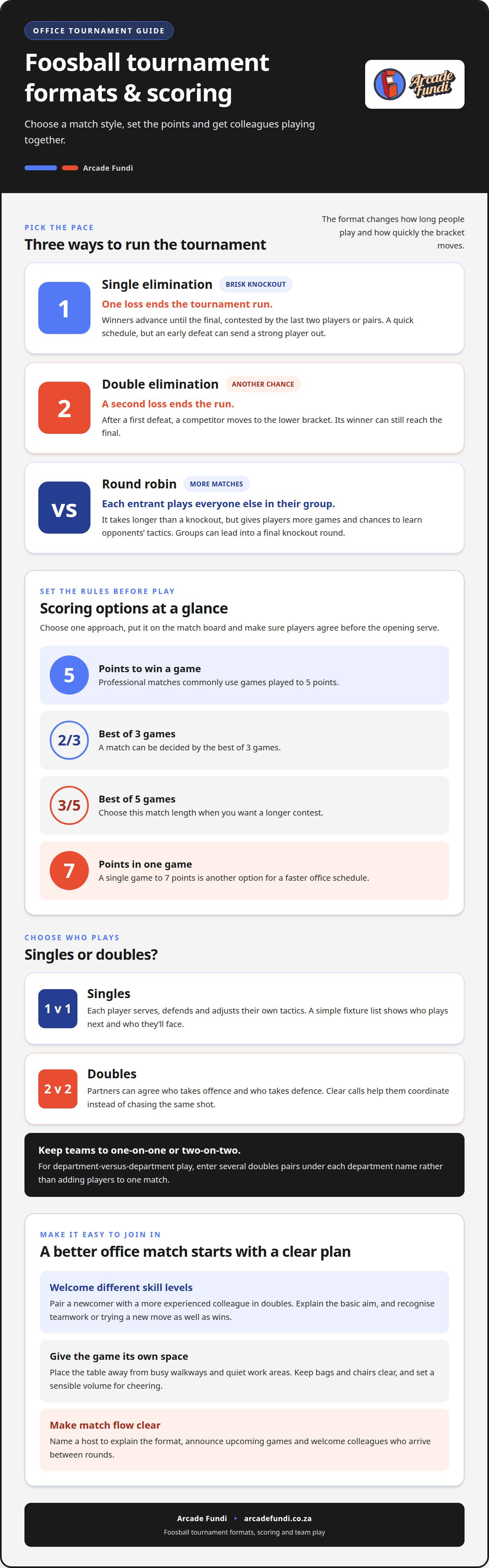
For a small office bracket, single elimination keeps the schedule moving: lose once, and your tournament ends. Each winner advances until two players or pairs contest the final. This format suits a short celebration, but one unlucky opening match can eliminate a strong player early. Double elimination offers another route. After a first defeat, a competitor enters the lower bracket. A second loss ends their run, while the lower-bracket winner can still reach the final.
Set the scoring before play begins, so each match follows the same rule. Professional foosball matches commonly use games played to 5 points. A match can be best 2 out 3 games or best 3 out of 5 games. For a faster office schedule, a single game to 7 points is another option. Put the chosen format on the match board, then have players agree on it before the opening serve.
Round robin gives each entrant a match against every other entrant in their group. It takes longer than a knockout, but gives players more games and opportunities to learn their opponents’ tactics. For a qualification format, run preliminary groups first, then advance the strongest finishers to a knockout bracket. For example, colleagues can play group matches before a final elimination round. Use this structure when you want broad participation and a decisive finish.
How long does an office foosball tournament usually take? The schedule depends on entrant numbers, tables, match format and scoring limit. Single elimination usually needs fewer matches than round robin, while longer game formats add playing time.
For workplace safety and noise, place the table away from busy walkways and quiet work areas. Keep bags and chairs clear of the playing space, and set a sensible volume for cheering. A designated event area helps colleagues play without disrupting nearby work. Follow your workplace’s event and equipment guidance.
Singles, doubles and team events
Singles suit colleagues who want to test their own reactions and tactics. Each player registers individually, then meets opponents in scheduled matches. This keeps responsibility clear: one person serves, defends and adjusts their approach throughout play. Singles can also help colleagues who are new to foosball join without finding a partner first. For an office event, ask participants to choose singles during registration and share player details beforehand. A simple fixture list then shows each person where to play and who they’ll face.
Doubles add teamwork to every exchange. Each pair can agree on roles before play, with one player taking offence and the other defence. Partners need to communicate when the ball changes position, rather than both chasing the same shot. For example, the attacking player can call an intended pass while their partner watches for a return. Let pairs choose their partner during registration, or create pairings that bring colleagues from different departments together. Either approach gives participants a clear reason to coordinate.
Keep the team format clear: foosball is played one-on-one or two-on-two, not with three players on a team. A workplace can still create department-versus-department competition by entering several doubles pairs under each department name. That way, colleagues share a team identity without crowding one match. If participation matters more than department rivalry, mix pairs across roles. Choose the arrangement that helps people meet and play together.
Use doubles to make collaboration part of the challenge, not just the result. Before each match, ask partners to decide who starts in offence and defence, then let them refine their tactics between games. A short team debrief can highlight a useful pass or a clever defensive move, keeping the focus on shared effort. For a friendly office event, pair an experienced player with someone trying foosball for the first time. Shape your next team challenge around the match style your colleagues will enjoy.
Engagement and friendly competition
A workplace foosball event gives colleagues a shared goal beyond their usual work. During a company away day, players can call passes, adjust tactics and cheer teammates between matches. Those quick exchanges create opportunities to connect with colleagues they may not work with every day. A close match also gives both sides something to discuss afterwards, whether they won or spotted a clever defensive move. Keep the focus on the play, so the result feels like a shared experience rather than a workplace performance review.
Match the event to the occasion. An office celebration can keep play informal, with colleagues joining as their schedules allow. A corporate retreat can make the tournament a central group activity, while a larger function can use a designated play area to draw spectators. For an extra challenge, invite participants to test their skills against an experienced player. Confident players get a memorable contest, while curious newcomers can watch tactics in action.
How can you make a foosball tournament inclusive for beginners and different skill levels? Pair a newcomer with a more experienced colleague in doubles, and explain the basic aim before play. You can also recognise trying a new move or communicating well, rather than only rewarding wins. For example, invite each pair to share one tactic they learned after playing. That keeps the focus on learning and welcomes first-time players.
Make participation easy with a clear event plan. Name a host to explain match flow, announce upcoming games and welcome people who arrive between rounds. Share the start time and playing location in the invitation, then leave space for colleagues to watch or join. For a foosball tournament for office celebrations, add a moment to recognise teamwork, a memorable save or a spirited comeback alongside the final result. These touches help turn a quick game into a shared office memory!
Tournament tables and equipment
The table shapes the match experience, so plan the equipment around your event format. One table can host a compact knockout, while a round robin may need more playing time or additional tables. The right setup depends on entrant numbers, match length and the time available. Map the schedule first, then decide how many matches can run at once without crowding the event space.
Check each foosball table before players arrive. Place it on a firm, level surface, with enough room for players to move the rods from both sides. Test that the rods move freely and the handles feel secure. Look over the playfield for debris, and keep the ball nearby between matches. These simple checks help prevent avoidable pauses once the fixtures begin.
Keep tournament equipment together at the playing area. A match board or printed fixture list helps players find their next opponent. Add a pen for recording results, and give the host a clear way to announce the next match. If several tables are in use, label each one and match it to the schedule. For example, a fixture can direct a pair to Table A while another match starts at Table B.
Set out the equipment to suit the room, not just the bracket. Keep the spectator area separate from player movement, and position the score sheet where the host can update it easily. A visible waiting area prevents players from gathering around the rods during play. Before the event starts, explain where matches begin, where results are recorded and how players move between fixtures.
For a company event, choose equipment that fits both the venue and the way colleagues will play. A clear playing area, a ready ball and an organised fixture list make the action easier to follow. Explore foosball tables as you plan the tournament setup.
Arcade Fundi: Foosball Tables
Arcade Fundi offers foosball tables to help equip your office tournament, team event or workplace recreation area. Choose a table as the centrepiece for head-to-head matches, or pair it with other activities to give guests more ways to play. Arcade Fundi’s team handles delivery, setup and collection, with delivery available nationwide across South Africa.
Planning an event? Think about where the table will go, how players and spectators will move around it, and whether it will be used beyond tournament day. These details help match the equipment to your venue and the way your team wants to play. For a lively mix, Arcade Fundi also offers arcade video games, pool tables and air hockey tables.
Contact Arcade Fundi to discuss a foosball table for your event.
Make your next office event a match to remember
Give colleagues a reason to step away from their desks, cheer one another on and enjoy a little friendly rivalry. A foosball tournament for office teams can become a lively highlight of a celebration, away day or staff gathering. Start by choosing the atmosphere you want: relaxed drop-in play, or a spirited competition with a final match to look forward to.
Arcade Fundi offers foosball tables, alongside arcade video games and pool tables, to bring play to your event or venue. Think about the space, the guest experience and how you want people to take part. Then turn that idea into a plan that feels right for your team.
Contact Arcade Fundi to plan your event and take the first step towards a memorable day of play. Let the friendly rivalry begin!
Frequently Asked Questions
Where can I hire a foosball table for an office tournament in South Africa?
Arcade Fundi offers foosball table rentals for events across South Africa. For a foosball tournament for office teams, share the event date, venue type and whether the table is for a one-off function or a longer-term arrangement. Those details help frame the equipment request around your plans. Arcade Fundi also offers foosball tables for sale if you want one for ongoing workplace use.
What are the official foosball rules and common office tournament formats?
Agree on simple house rules before the first serve, and explain what happens after interruptions. A coin toss can decide which team starts. If the ball leaves the playfield, the team that knocked it out forfeits possession; a dead ball in the middle is re-served by the closest defending player. These details help settle disputes quickly and keep matches moving.
How many players and teams should an office foosball tournament have?
Use singles for one-on-one matches or doubles for two-on-two play; teams of three are not allowed. The total number of entrants depends on how many colleagues want to take part and the time available. At registration, ask each person to select an event, provide player details and name a doubles partner if entering that category. This gives the organiser a clear entry list.
How do you create a foosball tournament bracket and schedule?
Set a registration closing point before preparing fixtures, so late changes don’t disrupt the draw. Give every entrant or pair the same name on the registration list and bracket. Then assign match slots around the event programme, leaving room for the final and any announcements. Share the schedule in advance, and record completed results promptly to keep the published standings accurate.
What equipment and space are needed for an office foosball tournament?
Beyond the table and playing ball, prepare a printed copy of the agreed rules, a sign-in list and a visible place for event notices. Check the route into the room before delivery, including doorways and lift access where relevant. Choose a location where players can hear the host’s announcements without interrupting nearby meetings or quiet work.
What prizes and team-building activities work well for an office foosball tournament?
Choose a prize that suits your workplace culture, such as a rotating desk trophy or a light-hearted team certificate. For a collaborative activity, have each pair explain one decision they made during a close match, then invite another pair to suggest an alternative. This turns tactics into conversation and gives participants a chance to learn from one another beyond the final score.