

The best fun conference break ideas don’t need elaborate staging: try a quick trivia challenge, a lively networking activity or a relaxed breakout zone. Conference-themed trivia or bingo can run for 20-30 minutes, with attendees split into groups of 4-10. It’s a simple way to spark conversation and bring a little friendly competition into the day.
A good conference break should do more than fill a gap. It gives people a chance to reset, connect and return to the next session ready to participate. The key is matching the activity to the time available and the energy in the room.
Here are ways to choose engaging conference breaks, bring attendees together and plan activities around the day’s natural highs and lows. From icebreakers and team challenges to creative, low-key resets, these ideas can make every pause feel like part of the experience.
Key Takeaways
- Match trivia, polls and other interactive breaks to the time available; small teams can turn a short pause into a lively shared challenge.
- Choose icebreakers that make it easy for attendees to join in, connect and compete without needing elaborate preparation.
- Place energisers where attention may dip, and use movement or a change of pace to help people return ready to participate.
- Build creative breaks into the schedule with enough time to move between sessions, and keep short activities simple rather than requiring a report-back.
1. Which Conference Ideas Work Best During Breaks?
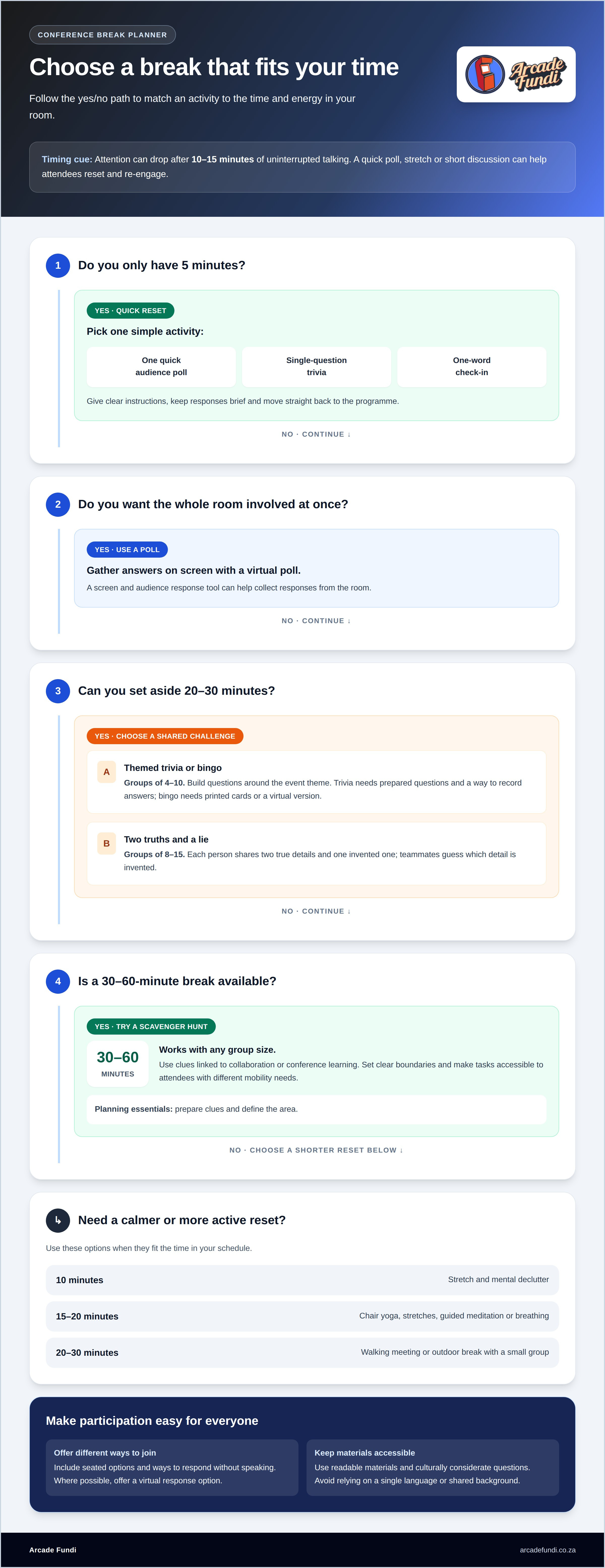
Conference trivia and themed bingo turn shared learning into an interactive team challenge. Run a 20-30-minute quiz, with attendees in groups of 4-10, and build questions around the event theme. Add a prize to give teams an extra reason to join in.
Keep the format simple: prepare short questions, explain how answers count, then rotate who responds. At corporate events, mix light general knowledge with conference topics so newcomers and specialists can both contribute. Use a virtual poll to gather answers on screen, or let in-person groups use answer sheets or call out responses.
Choose an activity to suit your event format and the resources available. Consider the time, materials, facilitation and venue setup when planning your conference break.
For a five-minute reset, try one quick audience poll, a single-question trivia round or a one-word check-in. Give clear instructions, keep responses brief and move straight back to the programme.
Many popular activities need little equipment: trivia needs prepared questions and a way to record answers, while bingo requires printed cards or a virtual version. Polls work with a screen and audience response tool; a scavenger hunt needs clues and a defined area.
For South African events, make participation accessible with seated options, readable materials and ways to respond without speaking. Use culturally considerate questions, avoid relying on a single language or shared background, and offer a virtual response option where possible.
A scavenger hunt suits longer breaks, running for 30-60 minutes and accommodating any group size. Set clues around collaboration or conference learning, explain the boundaries, and keep tasks clear for attendees with different mobility needs. Choose trivia for focused small-group play; use polls when you want the whole room involved at once.
2. Creative team-building and icebreaker ideas
For fun conference break ideas that build connections, choose activities where people can share something without giving a formal introduction. Two truths and a lie suits groups of 8-15 people and takes 20-30 minutes. Ask each person to share two true details and one invented one, then let teammates guess. It gives colleagues an easy conversation starter.
A musical icebreaker adds a nostalgic spark. Name that tune takes 20 minutes and accommodates up to 10 participants. Play a short excerpt, invite guesses, then ask which songs remind people of a particular era or place. This creates natural networking and lets attendees join through listening as well as speaking.
For more movement and imagination, try charades or improv-style games. They work best for groups of 10-25 people and run for 30-45 minutes. Charades with a twist gives players one minute to describe as many names as possible in its first round. Keep the prompts familiar and workplace-friendly.
Build a shared challenge into the break with How high can you go? Teams of four get ten minutes to construct the tallest tower they can. Blindfolded builds offers a different test: teams of five work together, and the activity can last up to 30 minutes. Make instructions clear and give each participant a role.
Use these fun conference break ideas to encourage collaboration, not just competition. Match the game to the room and the group’s comfort level. A short activity might prompt one quick exchange; a longer session could include a team challenge and a brief reflection. That final thought helps participants carry the connection into the next session.
3. Scheduling energisers and entertainment around attendee energy
Build movement into the agenda before attention starts to drift. Audience engagement can drop after 10-15 minutes of uninterrupted talking, so break up long presentations with an interactive moment. A quick poll, stretch or short discussion gives attendees a reason to reset and re-engage with the next topic.
Match the activity to the time of day. A chair yoga or stretch break can help attendees stand after sitting since 8 a.m. A 10-minute stretch and mental declutter offers a focused reset, whilst dance party yoga can fit a morning energiser, midday breakout or afternoon change of pace. The common 2 p.m. slump is a useful point to plan around, rather than stacking another presentation into the agenda.
Measure engagement with a quick, clear feedback step. After a breakout, use a poll, short survey or show of hands to find out which topic resonated and whether attendees want more discussion. For example, ask people to rate the session or choose one idea they’ll take forward. Use their responses to shape later activities and balance listening with participation.
Hybrid events need an easy way for remote attendees to join in. Run a shared poll, invite questions from online and in-room participants, or give small groups a focused discussion prompt. Keep instructions visible and let people respond through the event’s digital tools, so participation doesn’t depend on being in the room. Metaverse gaming can also work as a mid-morning activity, afternoon engagement zone or networking experience between sessions. Choose a slot that suits your agenda, then give everyone a clear way to take part.
4. Scheduling creative breaks during a conference
Treat each pause as a chance to shift pace, not merely fill time. Schedule a 10-15-minute gap between sessions, or avoid back-to-back sessions in one room. Participants can move, reset and choose what suits them before the next conference topic begins.
Offer quiet and social options side by side. A guided meditation or breathing session can run for 15-20 minutes and suit any group size. In a separate area, invite attendees to chat informally or discuss a prompt. This split lets people choose calm or connection without leaving the break entirely.
For an active reset, schedule chair yoga or stretches for 15-20 minutes. A walking meeting or outdoor break can run for 20-30 minutes with a small group. Add special elements, such as a route linked to the conference theme, but keep the activity easy to join.
How long should conference breaks be for networking and activities? Match the slot to its purpose: keep breaks under 30 minutes simple, and skip tasks requiring group output or a report-back. A 20-30-minute walk suits small-group conversation, while a longer networking pause gives participants more time to meet.
Use a 45-60-minute breakout session for deeper discussion or a skill-building workshop. Set one clear outcome, then give participants time to work together rather than squeezing in extra presentations. Simulators can add an interactive element during exhibition breaks, between keynote presentations or in the afternoon. The key is to place each format where it fits the agenda, with enough transition time for people to take part.
Arcade Fundi
Arcade Fundi helps you bring shared play into conference breaks with arcade video games, foosball tables, pool tables and air hockey tables. With 5 Decades of Experience, Arcade Fundi delivers nationwide across South Africa. The team handles delivery, setup and collection, helping event organisers plan the practical details alongside the programme.
Choose an activity that suits your event. Arcade video games offer attendees a casual option between sessions, while a foosball table creates a lively focus for friendly competition. Pool and air hockey tables give colleagues more ways to play together. Consider your floor space, attendee flow and whether you want a dedicated games area or an activity near a networking space.
These options suit corporate events, private functions and other gatherings where guests might enjoy a change of pace. A games area can welcome early arrivals, give colleagues something to share during a break or add an informal element to post-session networking. The right choice depends on your event layout and the atmosphere you want to create.
Arcade Fundi sells and rents arcade entertainment equipment, giving you options for different event needs. Share your event format, venue setup and the experience you want attendees to enjoy. These details can help you discuss suitable equipment and how it could fit into your schedule.
For a conference break with more play and friendly rivalry, contact Arcade Fundi to discuss your event.
Frequently Asked Questions
How To Choose Interactive Conference Ideas?
Choose interactive formats that connect directly to the event’s subject. At a customer experience conference, for example, invite attendees to rewrite a confusing service message in plain English. This gives the activity a useful outcome instead of making participation feel disconnected from the event’s purpose. Keep the instructions clear and offer a way to contribute without speaking to the whole room.
How to liven up a conference?
Give the programme a stronger sense of occasion by linking transitions to the event theme. A host can introduce each speaker with a short, relevant anecdote, while a visual agenda helps attendees see how sessions connect. You could also invite a guest to illustrate key points live. These touches add personality and keep the day cohesive without another game or competition.
Which Conference Ideas Work Best During Breaks?
Set up a skill-swap corner where attendees can share a practical tip related to their work. Someone might offer a useful spreadsheet shortcut, while another demonstrates a simple note-taking method. Label the area clearly and let people browse at their own pace. This gives attendees a reason to exchange knowledge and makes the break useful for those who prefer practical conversation.
What are fun conference break ideas for adults?
A low-pressure tasting or sensory activity can give adult attendees something novel to enjoy together. For example, offer a small selection of South African teas and invite people to describe the flavours. Make the activity optional and provide a non-tasting alternative, such as choosing a favourite aroma or packaging design. It creates an easy social moment without asking guests to perform.
What energizer games work well between conference sessions?
Try a word-association chain linked to the day’s subject. One attendee says a term, the next responds with a related word, and the chain moves around the room. The host can stop after a few contributions and highlight an unexpected connection. This verbal game needs no props, suits a seated audience and gives minds a quick change of direction before the next presentation.
What creative activities can attendees do during a conference break?
Set up a collaborative “future headline” board. Ask attendees to write a headline describing a positive change they hope the conference will inspire, then display the contributions together. Use cards and pens, or a shared digital board for remote participants. The activity creates a visual snapshot of the room’s ambitions and gives organisers a fresh theme to revisit in the closing remarks.