

What makes an arcade room exciting from the moment you step inside, without making it difficult to move, play or gather? The best arcade game room design ideas start with how people will use the space. A spare room for family and friends needs a different layout from a venue where guests want to compete, socialise or enjoy a favourite classic.
You need more than machines lined up against a wall. Plan space for each game, create an atmosphere that still feels comfortable, and choose activities suited to your audience. This guide covers play zones, lighting and seating, plus how to select games that fit your room and its purpose.
Arcade video games, pinball machines, foosball and air hockey can all bring people together, each in a different way. Arcade Fundi sells and rents a range of arcade entertainment equipment, including these games and more, for home entertainment, events and venues. Use the ideas below to shape a space that feels ready for one more game.
Key Takeaways
- Start with who’ll use the room, then shape the experience for family play, enthusiasts, venue guests or an event.
- Use arcade game room design ideas to map activity zones and keep entrances and walkways clear while games are in use.
- Choose a style and small colour palette that create atmosphere without making the space feel cluttered.
- Match arcade video games, pinball, pool, foosball and air hockey to the way your guests like to play.
- Turn your plan into action by shortlisting suitable games and considering whether buying or renting best fits the room’s use.
Arcade game room design ideas start with the people and the space
Good design begins with who’ll use the room and how they’ll play. Before choosing colours or games, think about who will take a turn, watch, chat or pass through. A family room may need flexible space and games that appeal to different ages. An enthusiast’s room can put favourite machines centre stage. A commercial venue should make it easy for guests to move between activities, while an event setup needs to suit the occasion and flow of attendees.
Choose the room’s purpose before its theme
Give the room one primary purpose, then add secondary activities only if they fit. At home, you might want casual play and somewhere to sit. A dedicated enthusiast space could focus on arcade video games or pinball. In a venue, games can give guests a shared activity without making conversation compulsory. For a temporary event, consider how people will enter, join a game and move on.
Once the purpose is clear, choose a style to support it. A retro look might draw on the colours, graphics and familiar feel associated with the golden age of arcade video games. A modern or sports-inspired direction could suit a different audience or setting. Whichever you choose, make sure the theme works with the layout rather than leaving guests with little room to play.
Turn room dimensions into a simple design brief
Measure the room and sketch its outline before shortlisting games or décor. Mark entrances, windows, fixed features and storage, then note existing furniture and anything you want to keep. This gives you a clearer picture of usable floor space and helps prevent equipment from competing with the room’s everyday needs.
Next, check the footprint of each game and the space needed to approach and use it. A machine may fit against a wall on paper but still obstruct a doorway or route once players gather around it. Keep entrances and main walkways clear, and leave room for people to watch without blocking someone else’s turn. When comparing options, consider the space needed during play, not just the equipment’s outline.
- Room shape: Note narrow sections, corners and open areas.
- Access: Mark entrances and the routes guests need to use.
- Fixed features: Include windows, storage and anything that cannot be moved.
- Keep or change: List existing furniture and equipment you plan to retain.
These practical arcade game room design ideas give you a useful brief before you select machines. Start with people, purpose and floor space, then build the look around a room that feels ready for play.
Plan an arcade game room layout with clear zones and easy movement
A memorable room needs more than a line-up of games. Plan how people will move through it, where they’ll gather and which activities need extra space. A practical sequence is to mark circulation routes, assign activity zones, place focal games and review comfort. This turns arcade game room design ideas into a layout you can test before moving equipment.
Arrange games around movement and visibility
Start with the entrance and the natural routes between it, seating and exits. Keep these paths open, including when players or spectators gather. Place attention-grabbing games where they’re easy to notice, but not directly in the way. Before settling on a position, picture how someone approaches the game, plays and steps away. Can another guest pass without interrupting?
Consider spectators, too. A pinball machine may draw a small crowd, while a foosball table needs players on opposite sides. Leave room for both the activity and anyone watching. For more ideas on blending play spaces with a home’s existing look, explore modern game room design ideas.
Create separate play, social and viewing zones
Give active games their own area, apart from a quieter spot for conversation or a break between turns. Rugs, furniture placement or lighting can signal where each activity belongs without adding clutter. Make room for waiting guests to sit or watch rather than placing them in a busy walkway.
For a commercial venue or event, think about where groups may gather around a popular game. Keep waiting guests away from the main route and other play areas. For a temporary setup, check the layout against the event’s entrances and expected guest flow.
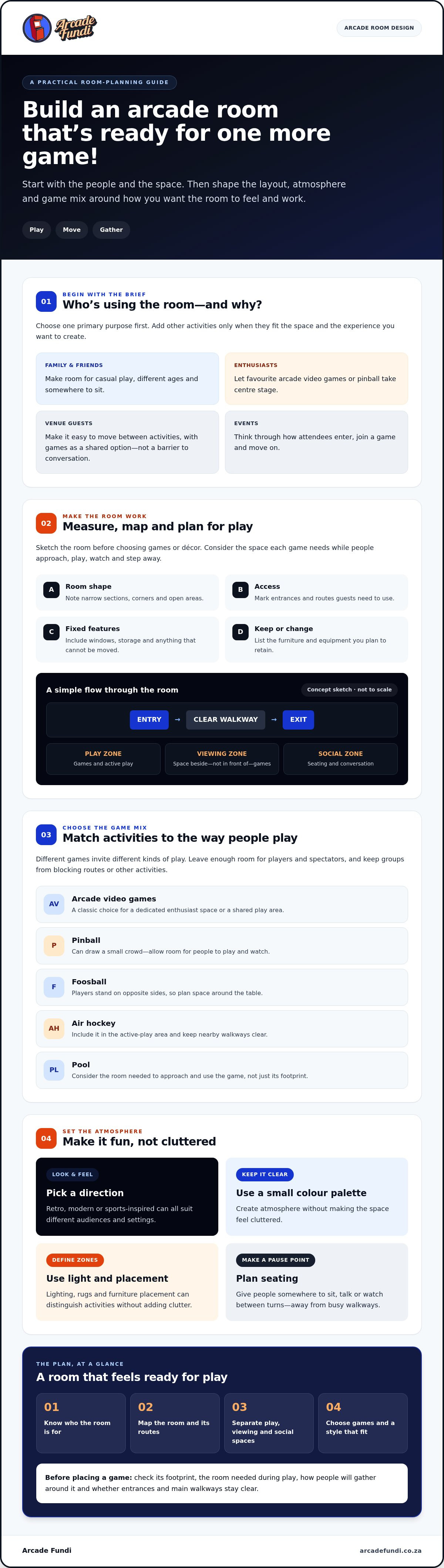
Simple floor-plan sketch:
ENTRY → CLEAR WALKWAY → EXIT
PLAY ZONE: arcade games and active play
VIEWING ZONE: space beside, not in front of, games
SOCIAL ZONE: seating and conversation
Use these labels as a starting point, then adjust them to suit your room’s shape and fixed features. No measurements are assumed.
- Mark circulation: Trace the route guests need to take through the room.
- Assign zones: Separate active play, viewing and socialising where possible.
- Place focal games: Make them visible without blocking access.
- Review comfort: Check each game’s approach, playing space and nearby waiting area.
Walk through your plan as a guest would before finalising it. If you’re choosing equipment for the layout, explore arcade and entertainment machines as options for your space.
Choose an arcade room style that feels fun, not cluttered
A strong theme gives your arcade room personality, but it shouldn’t compete with the games. Choose a direction that suits the people who’ll use the space, then repeat a few colours and details to make the room feel considered. Retro, modern and sports-inspired styles can all work. The right fit is the one that supports the atmosphere you want, whether nostalgic, relaxed or ready for friendly competition.
- Retro: Bold colour, classic arcade graphics and nostalgic details create an energetic, old-school mood for families, enthusiasts or guests who love familiar classics.
- Modern: Simple finishes, a restrained palette and comfortable furnishings feel polished and welcoming in a home or contemporary venue.
- Sports-inspired: Team colours, framed sports imagery and competitive touches bring a lively feel to spaces centred on watching and playing together.
Keep the palette manageable. Choose a main colour, a supporting shade and one accent, then repeat them through walls, lighting and furnishings. This gives the room a joined-up look without turning every surface into a feature. For more arcade game room design ideas, use one statement element, such as a striking wall graphic or standout machine, to anchor the room. Let the rest of the décor support it.
Build a retro arcade atmosphere with a few strong details
For a nostalgic look, take cues from the arcade era you enjoy rather than mixing every reference at once. A classic arcade video game or pinball machine can become the focal point, with complementary colour and a small amount of themed décor around it. Keep signs and graphics easy to read from the main viewing areas. A few well-placed details make the mood clear; too many can distract from the games.
Keep a modern game room warm and welcoming
Clean finishes don’t have to feel cold. Pair simple walls with comfortable seating and approachable lighting, then add personality with framed artwork or a selective display, such as a striking oil on canvas piece by Fringe. Wall-mounted details can add character without taking up floor space. In a sports-inspired room, carry one or two team colours into cushions or décor rather than covering every wall in memorabilia.
Still deciding which games suit your chosen look? Browse the arcade machines for sale guide to explore equipment options. Let the games lead the design, and your chosen style will feel fun, personal and easy to enjoy.
Match arcade games, lighting and seating to the way guests play
The right mix makes a room enjoyable for players and spectators alike. Start by asking what your guests are likely to enjoy: quick turns, games that reward practice, or relaxed activities that encourage conversation. Strong arcade game room design ideas bring together different ways to play without asking every game to compete for attention.
Select games for your audience and available space
Arcade video games can offer quick, familiar play, while pinball invites players to focus on timing and skill. Pool suits a more leisurely match, and foosball or air hockey brings fast, face-to-face competition. For spaces designed around cutting-edge realism, an immersive feature such as a 6 DOF motion simulator platform can serve as an incredible centrepiece. A thoughtful mix of arcade machines and table games gives guests a choice between a short turn and a longer social game.
Let your audience guide the selection. A family space may benefit from activities that different ages can enjoy together. In a workplace room, guests might prefer games that are easy to join between other activities. If you’re planning a game room at work, explore this office entertainment strategy for more ideas.
Before choosing equipment, check each game’s footprint and access needs with the supplier. Consider the space players need to approach and use it, as well as room for others to watch or pass by. Confirm that the options suit both your audience and the available floor area.
Use lighting and seating to shape the experience
Layer lighting by purpose. General room lighting helps guests move around and see the space, while focused illumination can make a play area easier to use. A distinct light above or near a feature game can draw the eye and give the room a focal point. Aim for a comfortable atmosphere where game screens and playing surfaces remain easy to see.
Place seating where people can watch and socialise without stepping into active play. A bench or chairs beside the games can make waiting part of the fun while keeping players’ approaches clear. Think about sightlines, too: spectators should be able to follow the action without blocking other guests.
For an event, plan for guests to gather, take turns and move between activities. Clear routes between games help the room stay lively without turning a popular machine into a bottleneck. Choose equipment that suits your layout and intended use, then explore arcade and entertainment machines for your space.
Bring your arcade game room design ideas to life with a practical plan
You’ve chosen the room’s purpose, mapped its zones and started shaping its atmosphere. Now turn those decisions into a plan you can check before equipment arrives. Reviewing the layout can help you catch awkward access, crowded play areas or seating that leaves guests out of the action.
Use a final room-planning checklist
Walk through the plan as a player, spectator and host. Check that every activity has usable access, guests can see and enjoy the games, and seating doesn’t interrupt movement. If you’re organising an event, consider where people will gather and how they’ll move between activities.
- Confirm the purpose: Be clear about who will use the room and what experience you want to create.
- Map the zones: Review play, viewing and social areas, along with entrances and natural routes through the room.
- Shortlist suitable games: Match the selection to your audience and the available space.
- Check guest flow: Look for pinch points around popular games and make sure waiting guests have somewhere to gather.
- Review the plan together: Ask the people who’ll use or manage the space to spot anything you may have missed.
Before settling on your shortlist, confirm each machine’s suitability and current availability directly with the supplier. Arcade Fundi offers arcade entertainment equipment for sale or rental, including arcade video games, pinball, pool tables, foosball and air hockey. Its range also includes options such as claw machines, jukeboxes, kiddies rides and vending solutions.
Decide whether to buy or rent equipment
Buying may suit a room planned for ongoing use, while renting can fit an event or a setup intended for a defined period. Consider how often the games will be used and whether the room’s purpose is likely to change. For event-led plans, explore entertainment equipment rental options. Discuss your setup and confirm suitable equipment and rental details directly with the supplier.
Ready to turn your plan into a room made for play? Contact Arcade Fundi about your planned game room setup and discuss equipment options for your space.
Make room for your next great game
The best arcade game room design ideas put people first. Start with the room’s purpose, plan clear routes between play and seating, then choose games and a style that suit the space. A welcoming layout gives players room to compete and spectators a comfortable place to enjoy the action.
Before you commit, review your plan with the people who’ll use the room and confirm that each game fits its intended spot. Decide whether buying or renting suits your plans, whether you’re creating a home arcade, updating a venue or arranging an event.
Arcade Fundi sells and rents entertainment equipment for home use, venues and events. Explore the available options and discuss which equipment suits your planned space through Arcade Fundi.
Frequently Asked Questions
How do you design an arcade game room in a small space?
Design around a clear purpose and keep the plan selective. Measure the room, mark doors, windows and furniture, then sketch a clear route through the space before choosing games. A single arcade video game can act as a focal point, with seating or a second activity added only if there’s room to use it comfortably. Check each option’s footprint and access needs with the supplier, and keep entrances and walkways clear.
What should you put in an arcade game room?
Choose equipment for the people who’ll use the room and the activities they enjoy. Arcade video games and pinball machines suit individual play, while foosball or air hockey can bring players together. A pool table offers another social activity if the room can accommodate it. Add comfortable seating, useful lighting and a few well-chosen decorative details, but leave enough open space for guests to play, watch and move around.
How do you arrange arcade machines in a room?
Start by marking the route from the entrance through the room, then place games around it rather than across it. Put a feature machine where it’s easy to spot without obstructing access. Allow players to approach and use each game, and leave spectators space to watch without blocking another activity. Before finalising the layout, mark proposed machine positions on the floor and walk through the room as a player and a guest.
What lighting works best in an arcade game room?
Combine general lighting for moving around with focused light near specific play areas. Keep game screens and playing surfaces easy to see, and avoid placing lights where they create distracting glare. You can use a distinct light to draw attention to a focal game, while softer illumination near seating can make the social area feel comfortable. Test the lighting from different spots in the room, including where guests will watch or wait.
How can you make an arcade room feel retro?
Choose a small colour palette and repeat it through wall details, lighting and furnishings. Add nostalgic character with arcade-inspired graphics or a few carefully selected pieces of memorabilia, then let a classic arcade video game or pinball machine take centre stage. Keep signs and artwork readable from the main viewing areas. A focused theme feels more intentional than covering every wall, leaving the games as the stars of the room.
Which games work well in a commercial arcade room?
Choose games to suit your guests, the space and the kind of interaction you want to encourage. Arcade video games can suit quick turns, while pinball offers a skill-focused activity. Foosball and air hockey invite head-to-head play, and pool can provide a more relaxed social option. Consider a mix, then confirm each game’s suitability, access needs and current availability with the supplier before planning the layout.
Can you rent arcade games for a temporary game room or event?
Yes. Arcade Fundi rents arcade entertainment equipment for events and venues, as well as selling equipment for purchase. Renting may suit a temporary game room or a specific event, while buying may suit a room planned for ongoing use. Confirm the equipment’s suitability and rental details with the supplier.